
Anglatin – Technical & Educational Study Tours
Japan is more than a destination — it is a fascinating cultural ecosystem where nature, tradition, and cutting-edge innovation live in unexpected harmony. For travelers interested in agriculture, geography, social organization, and cultural heritage, Japan offers one of the richest learning environments in the world.
A Geography of Contrasts
Stretching from the snowy island of Hokkaidō to the subtropical shores of Okinawa, Japan’s geography is a tapestry of mountains, forests, fertile valleys, and volcanic landscapes. More than 70% of the country is mountainous, shaping everything: transportation, city development, and especially agriculture.
Earthquakes, hot springs, and dramatic coastlines make Japan a true laboratory for understanding how human societies adapt to nature’s challenges.
Agriculture: Precision, Tradition, and Innovation
Japanese agriculture is a blend of ancient practices and advanced technology. Limited arable land has inspired remarkable efficiency:
-
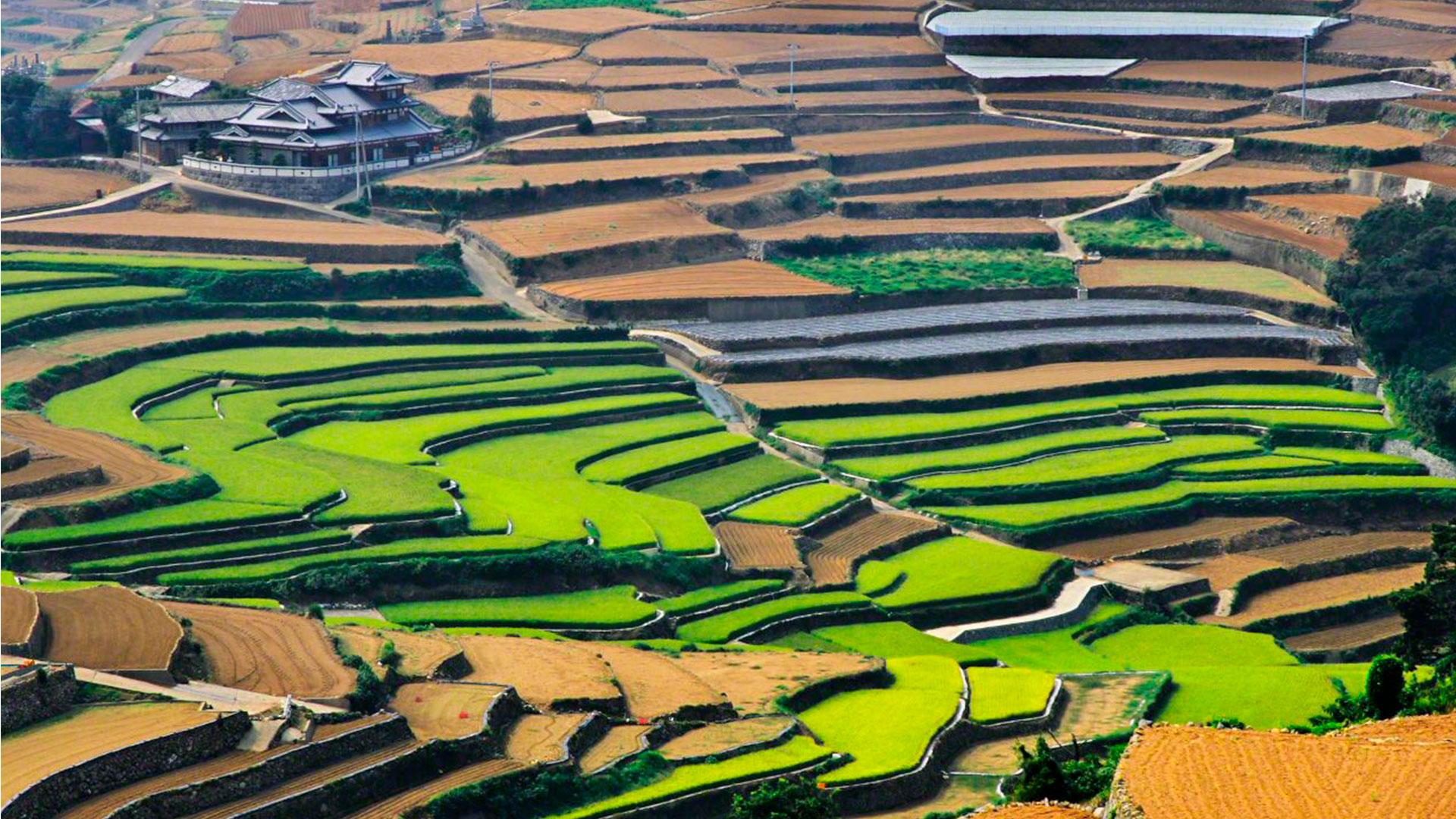
Terraced rice fields designed with centuries-old expertise
-
High-value niche crops such as green tea, wasabi, and specialty fruits
-
World-renowned livestock practices (like the famous Wagyu)
-
Robotics, AI, and controlled-environment agriculture transforming rural production
Japan shows how small plots, environmental challenges, and strong tradition can coexist with some of the world’s most modern farming solutions.
Culture: The Art of Harmony
Japanese culture is built around the idea of wa, or harmony — a concept that shapes communication, aesthetics, etiquette, and social life.
From tea ceremonies to calligraphy, from ikebana to the architecture of temples and shrines, Japan values balance, beauty, and attention to detail.
This cultural sensibility can be seen everywhere: in public spaces, in schools, in business culture, and even in the quiet precision of everyday routines.
Buddhism and Shinto: Two Spiritual Paths, One Identity
Japan’s spiritual life is guided by two traditions that coexist gracefully:
-
Shinto, Japan’s indigenous belief system, celebrates nature and ancestral spirits.
-
Buddhism, introduced from China and Korea, focuses on compassion, meditation, and the impermanence of life.
Together, these traditions shape festivals, rituals, family life, and the deep respect for nature that permeates Japanese society.
Urban Japan: Innovation with Discipline
Cities like Tokyo, Kyoto, and Osaka showcase Japan’s extraordinary ability to combine the modern with the timeless. Bullet trains glide past ancient temples. Robotics research centers coexist with centuries-old artisan neighborhoods. Order, efficiency, and design play a key role in daily life.
For travelers with academic or professional interest, Japan offers unparalleled opportunities to observe:
-
Sustainable development
-
High-density urban planning
-
Technological innovation
-
Cultural resilience
-
Agricultural modernization
Why Japan for Anglatin?
Because Japan is a living classroom — a country where every landscape, every industry, and every tradition has something to teach. Whether you are a student, a professional, or a curious traveler, Japan offers insight into how societies can grow with discipline, creativity, and respect for both past and future.