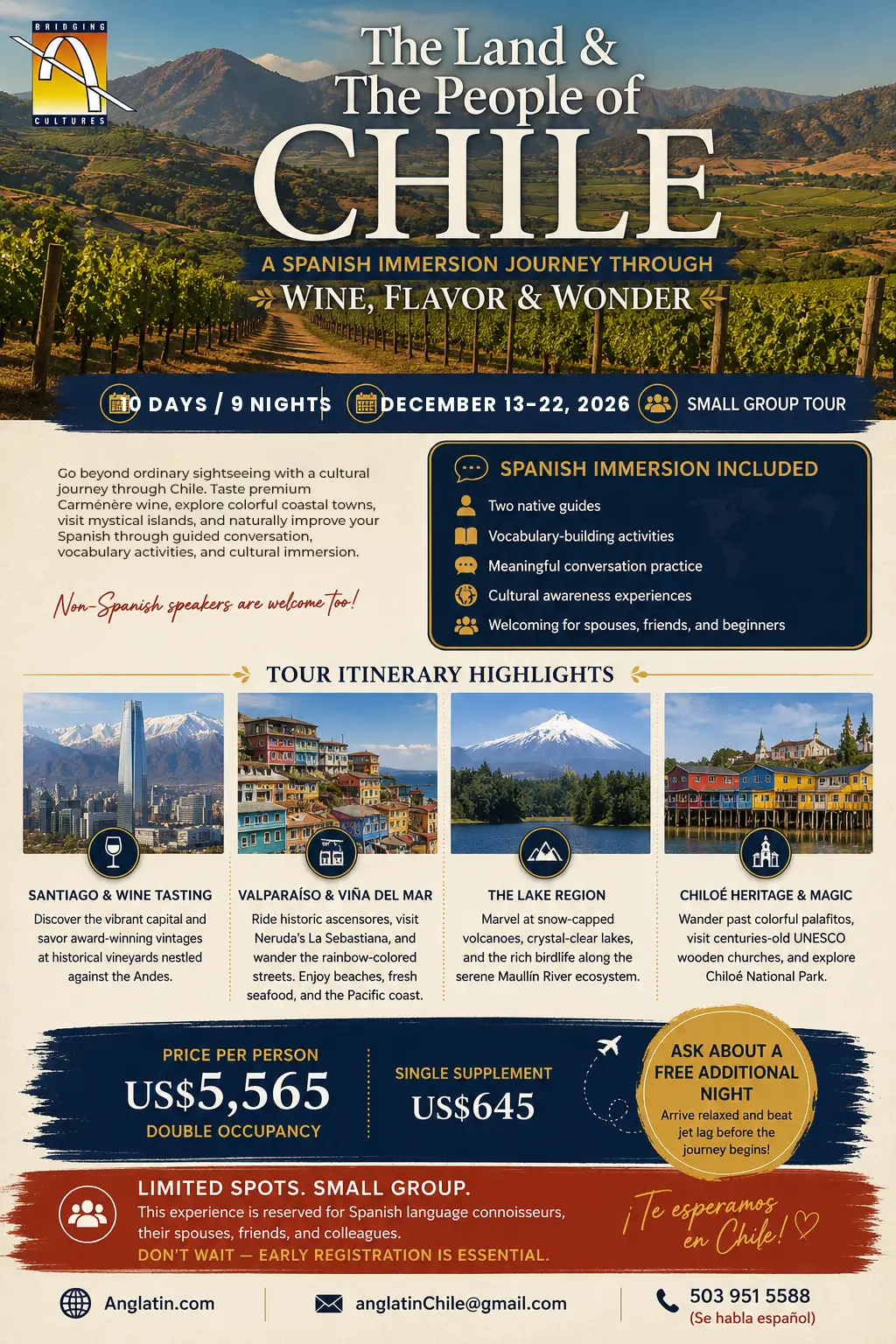
Chile to Latin lovers, culture-first travelers who possess a deep appreciation for Hispanic heritage, the Spanish language, arts, and local tradition.
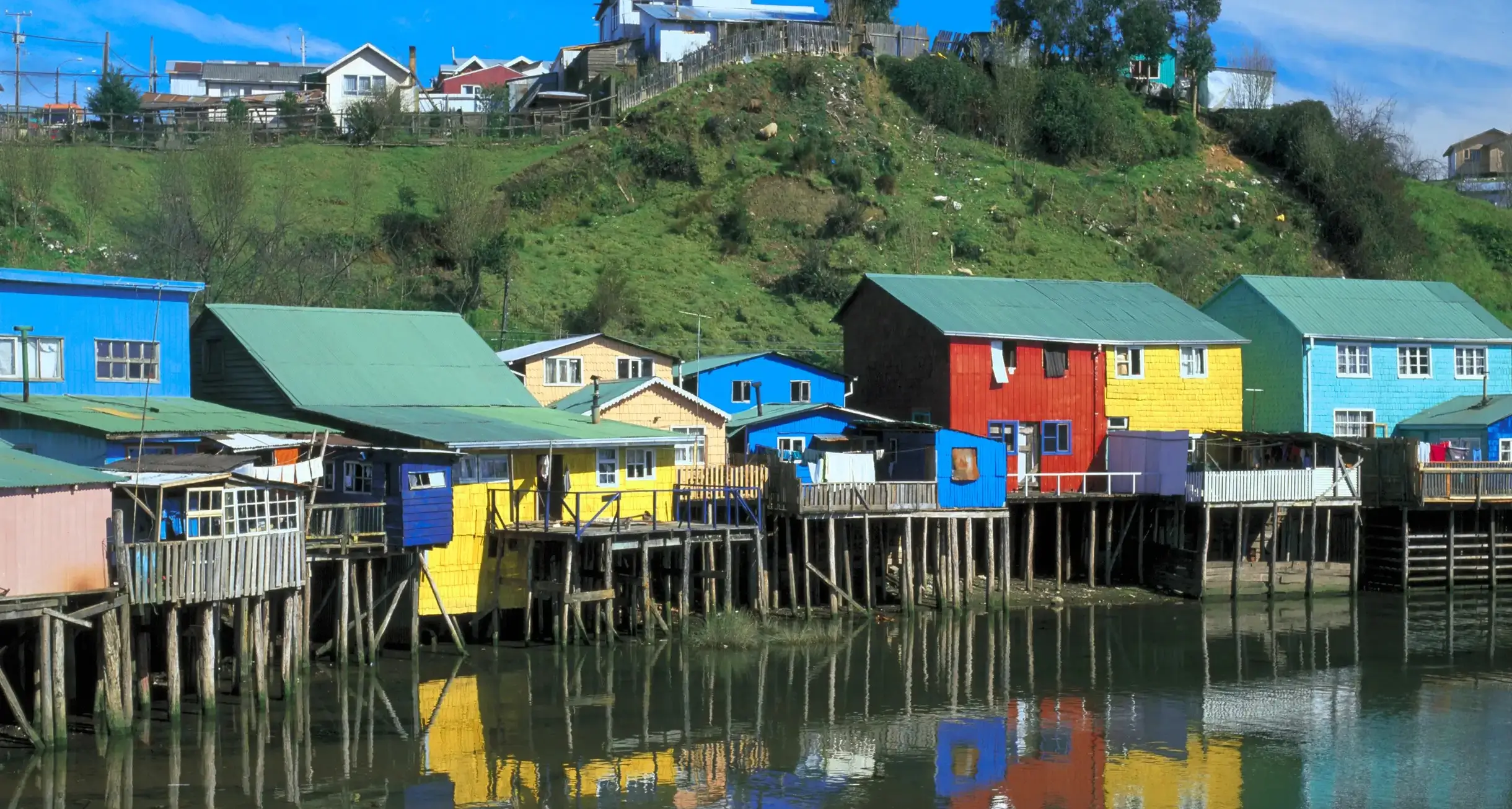
Located near a coastal wetland in Quemchi, Chiloé, family, friends, and neighbors gather to cross a wooden walkway. Accompanied by the music of accordions and guitars, they walk along the path, built just wide enough to carry a casket. Deep emotions blend with the creaking of the wooden planks, the music, the wind, and the birds.
The walkway stretches 520 meters (0.32 miles) to Aucar Island—known as the “Island of the Navigator Souls”—where the community lays their loved ones to rest, returning them to the sea.
Every September, the community celebrates the arrival of the Nazareno, one of their most important religious ceremonies. The locals have cared for the Navigator Souls for over 200 years, and the site has been declared a National Monument. What would you call this tradition? It’s a wonderful and moving gesture of unity within the community. How would you describe it?
The word “culture” comes from the Latin cultura, which originally meant “to cultivate the earth,” or agriculture. Centuries later, during the Enlightenment, the concept evolved to describe the “cultivation of the mind,” referring to people educated in the arts and sciences.
It wasn’t until the 19th century that modern anthropology defined culture as that complex whole of habits, beliefs, and knowledge acquired by people as members of society. Finally, UNESCO expanded it into what we seek on every journey today: the set of distinctive spiritual, material, and emotional features that characterize a society.
Our industry has been developing itineraries all over the globe to give our passengers the experience of tasting and learning about other cultures. Traveling gives travelers “a cultivation of the mind” without even going to a museum. Cultivation means much more than our intellectual capacities—it includes our senses, because they’re one of the ways we interpret the outside world. Our internal self, through the brain, receives countless new stimuli and thoughts each moment we confront a new experience. Our mind, in turn, uses short- and long-term memory to recollect smells, tastes, excitement, and pleasure.
Edward Tylor, in the 19th century, challenged the idea that only people with a certain intellectual education have “culture.” He established that education and culture are entirely different concepts, and that every human group has its own culture. In this sense, culture is defined day by day, as a learning process—starting with a baby’s first sounds, and continuing through activities like cooking, oral traditions, dance, and mythology. Each human group shapes its own culture in relation to its needs, history, and traditions. All these customs, habits, and daily practices within communities are part of what we call culture, or cultural characteristics.
This vignette about the community in Quemchi, Chiloé Island, Chile, is exactly what Tylor described. There is no single culture—each community creates, transforms, and implements its own.
Our program to Chile for December 2026 is carefully designed to showcase a blend of nature, arts, tradition, and local culture. We introduce travelers to the people of Chile through their language, cooking, textiles, wool work, traditions, and mythology.
Ask us about our program to Chile. December 13–22, 2026